The thing which could not be put back
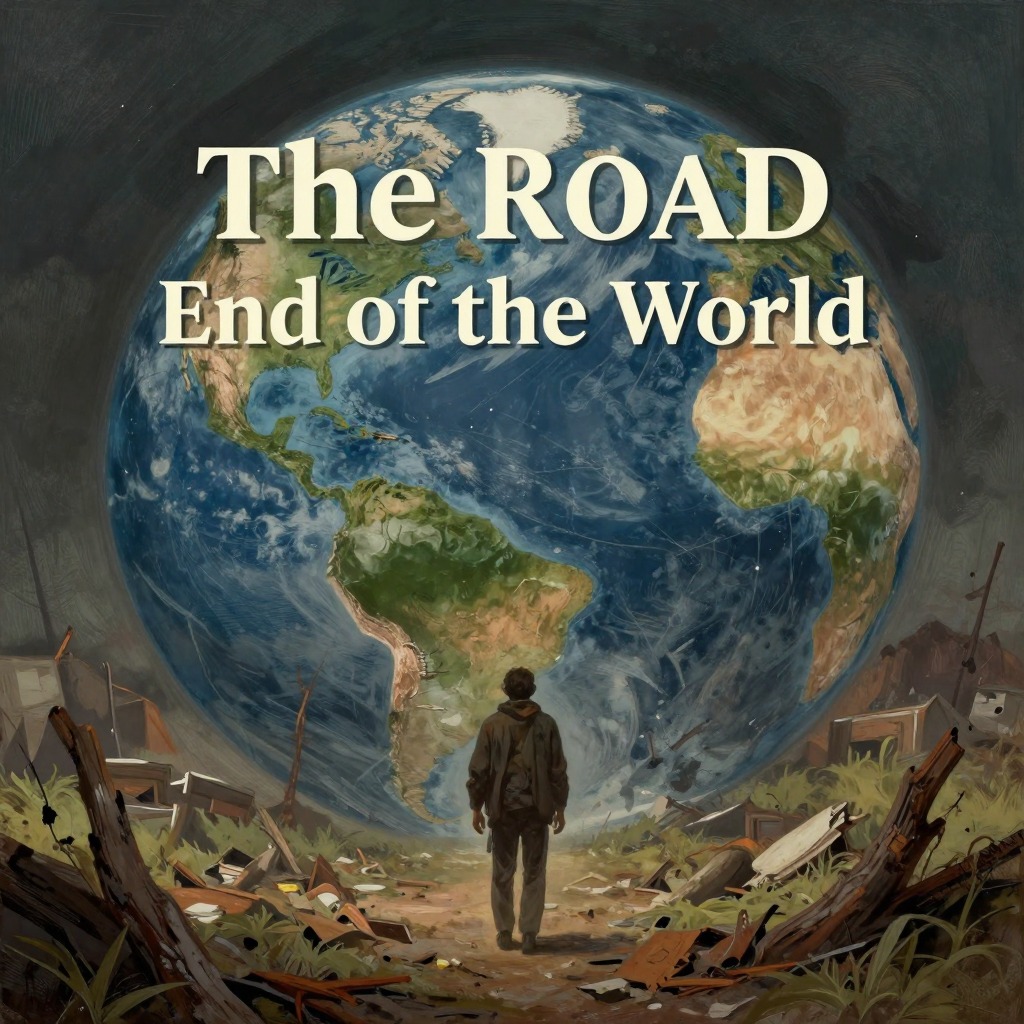
The thing which could not be put back is a philosophical and ecological concept that emerges at the very end of Cormac McCarthy's The Road, serving as the novel's final, resonant meditation on the totality of the world's destruction. It is not a physical object but an idea, a recognition that the natural order, with its intricate beauty and biological complexity, has been irrevocably lost. The phrase appears in the book's closing passage, which describes brook trout in mountain streams, their fins wimpling in the amber current, their backs marked with "vermiculate patterns that were maps of the world in its becoming. Maps and mazes. Of a thing which could not be put back. Not be made right again." This concept crystallizes the novel's central theme: the end of the world is not merely a catastrophic event but a permanent condition, a state of being from which there is no return.
Definition and Appearance
The thing which could not be put back is defined entirely through the novel's final image, which stands in stark contrast to the gray, ashen, and lifeless landscape that dominates the narrative. The passage recalls a world of living streams, trout, and moss, a world that was "older than man" and "hummed of mystery." This memory is not a hope for restoration but an elegy for what has been lost. The "maps and mazes" on the trout's backs are described as patterns of the world in its becoming, suggesting that the natural world contained within itself a record of its own creation and evolution. The thing which could not be put back is this entire living, self-organizing system, now reduced to ash and silence. The concept is not argued or debated by the characters; it is simply stated as a final, unassailable truth, a verdict on the world the man and the boy have traversed.
Connection to the Novel's World
The concept is the logical conclusion of the novel's relentless depiction of a dead world. Throughout their journey, the man and the boy encounter a landscape stripped of all life: forests burned to blackened poles, rivers choked with ash, the sea gray and birdless. The man tells the boy that there are no fish in the lake, no crows in the sky, and that the cows are likely extinct. The thing which could not be put back is the cumulative weight of these individual losses. It is the recognition that the extinction of species, the destruction of ecosystems, and the poisoning of the earth are not temporary setbacks but permanent erasures. The novel's world is one where the "sacred idiom" has been "shorn of its referents," where the names of things—birds, colors, foods—slowly follow those things into oblivion. The thing which could not be put back is the ultimate referent that has been lost: the living world itself.
Thematic Significance
The thing which could not be put back serves as the novel's final, devastating counterpoint to the boy's insistence on carrying the fire. The fire—a metaphor for goodness, compassion, and moral continuity—is a human construct, a fragile hope that the boy can sustain. But the natural world, with its deep time and intricate beauty, is beyond human repair. The novel does not offer a reconciliation between these two poles. Instead, it presents them side by side: the boy's survival and his adoption by a new family, and the memory of the trout in the mountain streams, a world that can never be made right again. This juxtaposition creates a profound tension, suggesting that while human goodness may persist, it does so in a world that has been fundamentally and irreversibly broken. The thing which could not be put back is not a call to action but a lament, a recognition that some losses are so total that they define the very nature of the reality that remains.
Narrative Role and Evaluation
As a concept, the thing which could not be put back functions as the novel's final, authoritative statement on the nature of the catastrophe. It is not spoken by any character but is delivered by the narrator in the book's closing lines, giving it the weight of an objective truth. This narrative choice elevates the concept from a personal realization to a universal condition. The passage's lyrical beauty, in stark contrast to the grim prose that precedes it, underscores the depth of the loss. The thing which could not be put back is the novel's most powerful expression of grief, not for the man or the boy, but for the entire world that was. It is a concept that haunts the reader long after the book is closed, a reminder that some things, once destroyed, are gone forever, and that the maps and mazes of the living world are a thing of the past, a memory that cannot be restored.